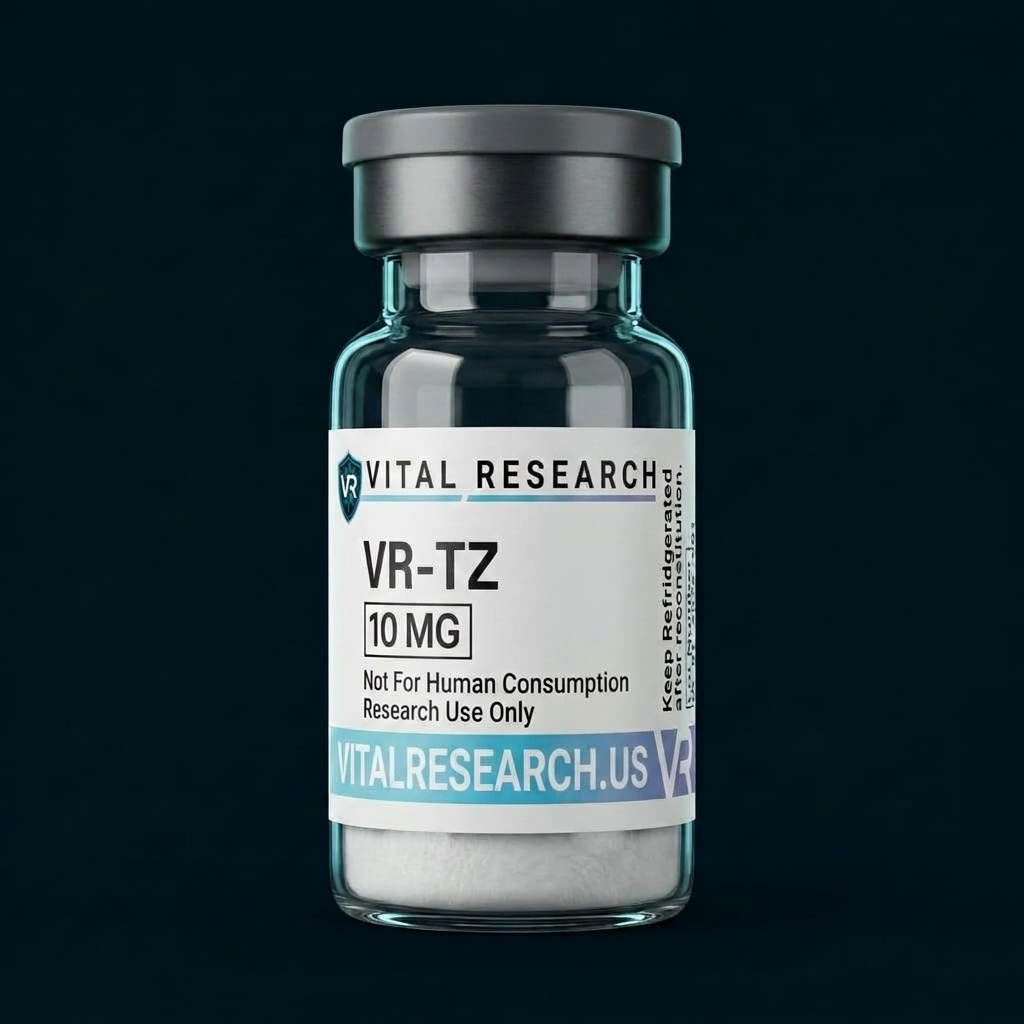
COA
Certificate of Analysis
Third-party HPLC and MS testing for every batch, published before purchase and tied to the batch being sold.
HPLC / MSAll products made available on this website are intended exclusively for research and development purposes and are strictly not for human consumption or therapeutic use. These products are not approved by the U.S. Food and Drug Administration (FDA), and no statements on this website have been evaluated by the FDA.
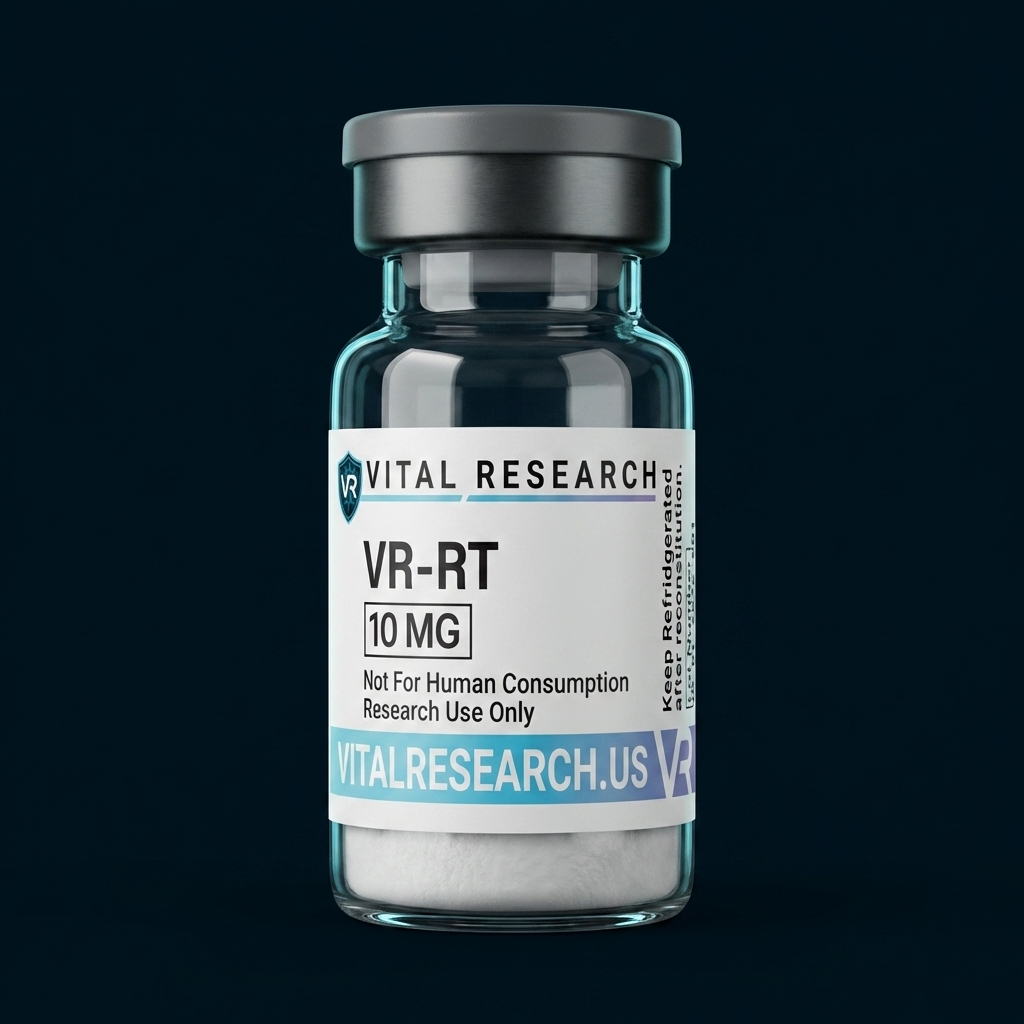
Triple-receptor agonist (GLP-1 / GIP / Glucagon).
Lyophilized powder may shift or come loose during transit; that is a normal occurrence and does not affect the integrity of the research product. Fill appearance and batch-specific details may vary. Refer to the Certificate of Analysis below for the documentation tied to the current batch.
VR-RT belongs to a newer category of research peptides built around three metabolic signaling systems: GLP-1, GIP, and glucagon. In plain English, researchers are asking what changes when one molecule is designed to interact with all three instead of just one or two.
That makes it an interesting model for comparing how these pathways behave, how they overlap, and how triple-agonist designs differ from single- or dual-pathway peptides.
Third-party HPLC and MS testing for every batch, published before purchase and tied to the batch being sold.
HPLC / MSEvery vial is stamped with a batch ID that links back to its COA, source record, and current product documentation.
Batch linkedProduct identity, strength, and batch reference stay easy to match from the product listing to the vial in hand.
Listing to vialGLP-1 and GIP are usually discussed through incretin signaling. The glucagon-receptor lane adds a different metabolic signal to study, especially around hepatic glucose handling, lipid metabolism, and energy-balance models.
VR-TZ is the cleaner two-pathway comparison. VR-RT adds glucagon-receptor activity, so the useful question is not just "which is stronger" but what changes when a third receptor system is added to the model.
The batch page should tie the vial code to identity testing, purity testing, the lab report date, and the exact lot being shipped. If the batch code on the vial misses the published COA, the documentation misses the point.
Start with receptor profile. Dose tells you vial strength, price tells you catalog position, but the real research distinction is the GLP-1 / GIP / glucagon receptor map and the batch documentation behind the material.
Literature links are included for background reading. Batch-specific identity and purity details live in the COA tied to the current batch.