COA
Certificate of Analysis
Third-party HPLC and MS testing for every batch, published before purchase and tied to the batch being sold.
HPLC / MSAll products made available on this website are intended exclusively for research and development purposes and are strictly not for human consumption or therapeutic use. These products are not approved by the U.S. Food and Drug Administration (FDA), and no statements on this website have been evaluated by the FDA.
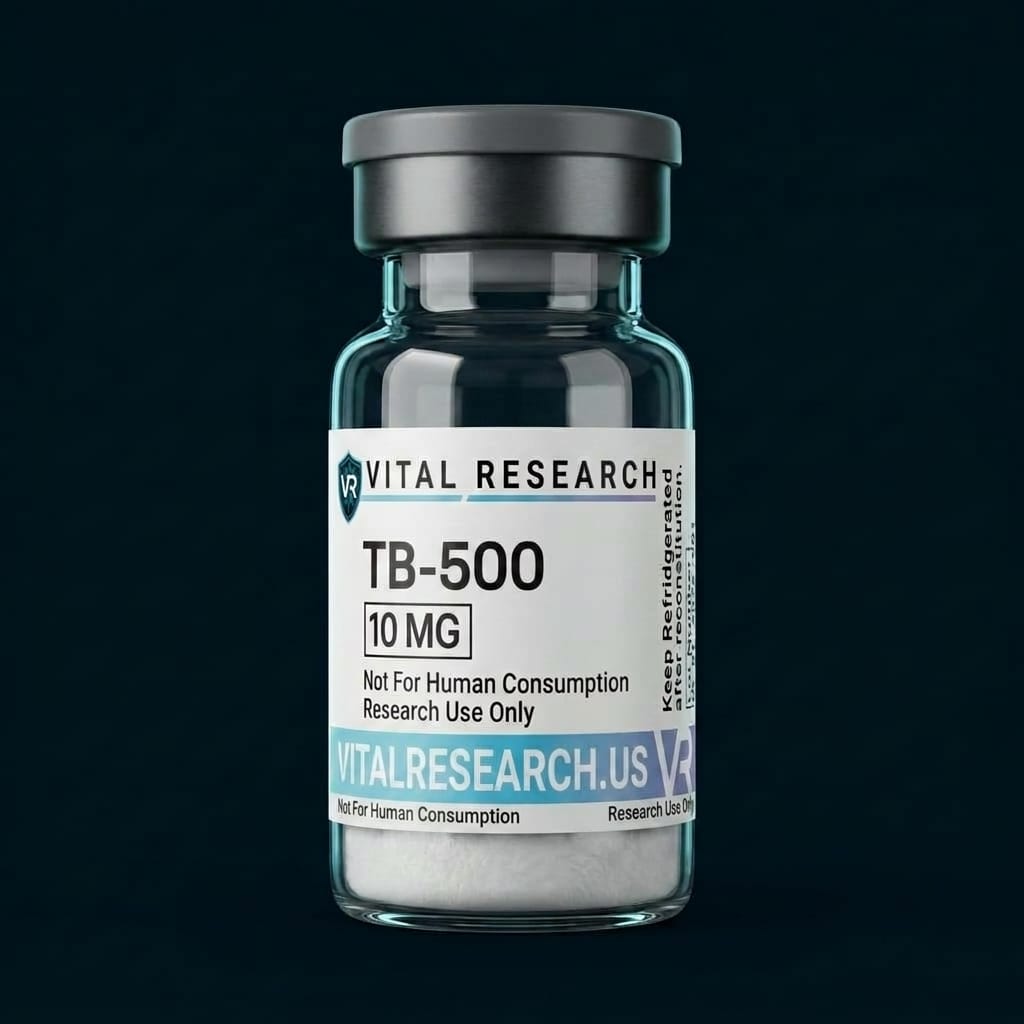
Thymosin beta-4 research peptide for cell-migration and tissue-model studies.
Lyophilized powder may shift or come loose during transit; that is a normal occurrence and does not affect the integrity of the research product. Fill appearance and batch-specific details may vary. Refer to the Certificate of Analysis below for the documentation tied to the current batch.
TB-500 is usually framed through thymosin beta-4 biology. The research lane is cell movement and actin-linked behavior: how cells migrate, organize cytoskeletal structure, and respond in controlled tissue-model systems.
That makes TB-500 a useful single-component comparison against BPC-157. It also explains why the BPC/TB blend exists: the two materials are adjacent, but not interchangeable.
Third-party HPLC and MS testing for every batch, published before purchase and tied to the batch being sold.
HPLC / MSEvery vial is stamped with a batch ID that links back to its COA, source record, and current product documentation.
Batch linkedProduct identity, strength, and batch reference stay easy to match from the product listing to the vial in hand.
Listing to vialThe most useful research vocabulary comes from thymosin beta-4 biology, especially actin binding, cell migration, and matrix-remodeling contexts.
No. They are often discussed near each other, but BPC-157 and the TB-500-style lane have different source trails and different readouts. That is why both single-component pages are useful.
VR-BPC-TB becomes the cleaner comparison when the point is studying both adjacent lanes in one material instead of isolating TB-500-style biology.
Confirm the batch code on the vial matches the COA, then read identity, purity, labeled strength, and any measured-strength result from that release record.
Literature links are included for background reading. Batch-specific identity and purity details live in the COA tied to the current batch.